As organizations move toward cloud computing, remote work, and interconnected digital systems, traditional cybersecurity models are no longer sufficient. Earlier security strategies focused primarily on protecting the network perimeter, assuming that users inside the network could be trusted. However, modern cyber threats have made this approach outdated.
Today’s enterprises require a more advanced security framework that assumes threats can originate both inside and outside the organization. This need has led to the adoption of the Zero Trust Security Model, an approach designed to protect enterprise systems by continuously verifying users, devices, and access requests.
The Zero Trust model is quickly becoming the future of enterprise cyber defense, enabling organizations to protect sensitive data, applications, and infrastructure in increasingly complex IT environments.
What Is the Zero Trust Security Model?
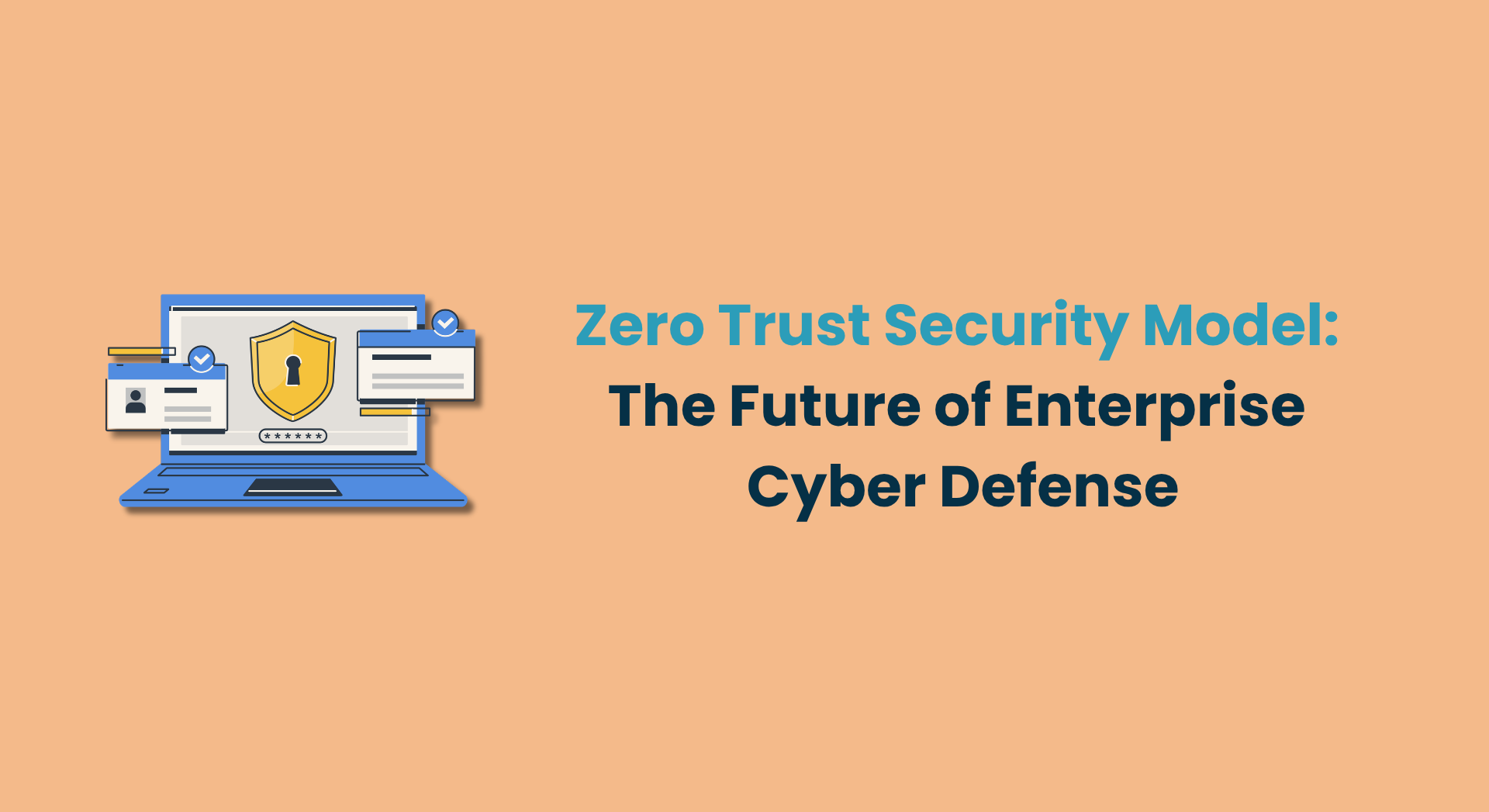
The Zero Trust Security Model is a cybersecurity framework based on the principle “never trust, always verify.” Instead of assuming that users or devices inside a corporate network are trustworthy, Zero Trust requires continuous authentication and authorization before granting access to resources.
According to cybersecurity standards from NIST, Zero Trust removes implicit trust from networks and focuses on protecting individual resources such as applications, data, and services rather than relying solely on network boundaries.
In this model:
- Every user must be authenticated
- Every device must be verified
- Every access request must be validated
- Access is granted only with strict policies
This approach significantly reduces the risk of data breaches and unauthorized access.
Why Traditional Security Models Are No Longer Enough
For many years, organizations relied on perimeter-based security, where firewalls and VPNs protected internal networks from external threats.
However, modern enterprise environments have changed dramatically.
Rise of Cloud Computing
Companies now host applications and data across multiple cloud platforms, making it difficult to secure a single network boundary.
Remote and Hybrid Work
Employees increasingly access corporate resources from different locations and devices, which weakens traditional security models.
Increasing Cyber Threats
Cybercriminals use sophisticated techniques such as phishing, ransomware, and insider attacks to gain access to corporate systems.
Growing Attack Surface
Modern organizations manage numerous endpoints including mobile devices, IoT devices, and cloud services.
Because of these factors, relying on perimeter-based defense is no longer effective. Zero Trust addresses these challenges by securing every access request regardless of its origin.
Core Principles of the Zero Trust Security Model
Zero Trust architecture is built on several key principles that ensure strong cybersecurity protection.
1. Verify Explicitly
Every access request must be authenticated and authorized before access is granted.
This includes verifying:
- User identity
- Device security status
- Location and behavior
- Access privileges
Continuous verification ensures that unauthorized users cannot gain access to sensitive systems.
2. Least Privilege Access
Zero Trust follows the principle of least privilege, which means users are granted only the minimum level of access required to perform their tasks.
This reduces the potential damage caused by compromised accounts or insider threats.
For example:
- Developers may access code repositories but not financial databases.
- Customer support agents may access user profiles but not backend infrastructure.
Limiting access significantly reduces attack surfaces.
3. Assume Breach
Zero Trust assumes that cyber attackers may already be inside the network.
Instead of focusing only on prevention, organizations design systems that detect and contain breaches quickly.
This mindset encourages:
- Continuous monitoring
- Real-time threat detection
- Rapid response to suspicious activity
4. Continuous Monitoring
Security systems constantly monitor user behavior, network traffic, and device health to identify suspicious patterns.
Advanced technologies such as behavior analytics and AI-driven threat detection help organizations detect anomalies early.
Key Components of Zero Trust Architecture
To implement Zero Trust effectively, organizations rely on several technologies and security controls.
Identity and Access Management (IAM)
IAM systems verify user identities and enforce access policies based on roles and permissions.
Common methods include:
- Multi-Factor Authentication (MFA)
- Single Sign-On (SSO)
- Role-Based Access Control (RBAC)
Micro-Segmentation
Micro-segmentation divides networks into smaller isolated segments to prevent attackers from moving laterally across systems.
If one segment is compromised, the breach cannot easily spread across the entire network.
Endpoint Security
Devices such as laptops, smartphones, and servers must meet security requirements before accessing enterprise systems.
Endpoint security includes:
- Device health checks
- Patch compliance
- Malware protection
Network Monitoring and Analytics
Organizations monitor network traffic continuously to detect unusual activity.
Analytics tools analyze patterns such as:
- Unusual login locations
- Abnormal data transfers
- Suspicious device behavior
Encryption
Data must be encrypted both in transit and at rest to protect sensitive information from unauthorized access.
Benefits of the Zero Trust Security Model
Adopting Zero Trust provides several advantages for modern enterprises.
Stronger Data Protection
Zero Trust ensures that only authenticated users and devices can access sensitive data, significantly reducing the risk of breaches.
Reduced Attack Surface
By enforcing least-privilege access and micro-segmentation, organizations limit the number of potential attack paths available to cybercriminals.
Better Protection Against Insider Threats
Traditional models trust internal users by default, but Zero Trust continuously verifies access requests from both internal and external users.
Enhanced Cloud Security
As businesses migrate workloads to cloud environments, Zero Trust provides consistent security policies across cloud and on-premise infrastructure.
Improved Compliance
Zero Trust frameworks help organizations comply with regulatory requirements such as:
- GDPR
- HIPAA
- PCI DSS
Because all access activities are logged and monitored.
Real-World Use Cases of Zero Trust
Zero Trust is widely used across industries where protecting sensitive data is critical.
Financial Services
Banks use Zero Trust to secure online banking platforms and prevent fraud.
Healthcare
Hospitals implement Zero Trust to protect patient records and medical systems.
Government Agencies
Many government organizations are adopting Zero Trust to protect national infrastructure.
Technology Companies
Tech companies rely on Zero Trust to secure cloud platforms, development environments, and customer data.
Challenges in Implementing Zero Trust
Although Zero Trust offers strong security benefits, organizations may face challenges during implementation.
Complexity
Transitioning from traditional security models to Zero Trust requires redesigning infrastructure and access policies.
Legacy Systems
Older systems may not support modern authentication or identity verification mechanisms.
Cost and Resource Requirements
Implementing Zero Trust may require investment in new security tools and expertise.
Cultural Change
Organizations must shift from a trust-based security mindset to a verification-based model.
Despite these challenges, many enterprises are moving toward Zero Trust as part of their long-term cybersecurity strategy.
How Organizations Can Start Implementing Zero Trust
Enterprises can adopt Zero Trust gradually by following a structured approach.
Identify Critical Assets
Organizations should first identify their most valuable data, systems, and applications.
Strengthen Identity Security
Implementing multi-factor authentication and strong identity management systems is a critical first step.
Apply Least Privilege Access
Access policies should ensure users only access what they need.
Implement Continuous Monitoring
Security teams should monitor network traffic and user behavior in real time.
Segment the Network
Micro-segmentation helps isolate critical resources and prevent lateral movement.
The Future of Zero Trust Cybersecurity
As cyber threats continue to evolve, Zero Trust is expected to become the standard security model for modern enterprises.
Several emerging technologies are further strengthening Zero Trust implementations.
AI and Machine Learning
AI-driven analytics can detect abnormal user behavior and potential threats more quickly.
Cloud-Native Security
Cloud environments are increasingly designed with Zero Trust principles built into infrastructure.
IoT Security
With billions of connected devices, Zero Trust will play a critical role in securing IoT ecosystems.
Automated Security Operations
Automation will help organizations respond faster to threats while reducing operational workload.
Conclusion
The Zero Trust Security Model represents a major shift in how organizations approach cybersecurity. By eliminating implicit trust and continuously verifying access requests, Zero Trust helps protect enterprise systems against modern cyber threats.
Unlike traditional perimeter-based security models, Zero Trust focuses on securing users, devices, and applications individually. This approach provides stronger protection against data breaches, insider threats, and sophisticated cyber attacks.
As organizations continue to embrace cloud computing, remote work, and digital transformation, Zero Trust is becoming a critical foundation for future enterprise cyber defense strategies.
For IT professionals and cybersecurity specialists, understanding Zero Trust architecture is an essential skill for securing modern enterprise environments and building resilient security infrastructures.