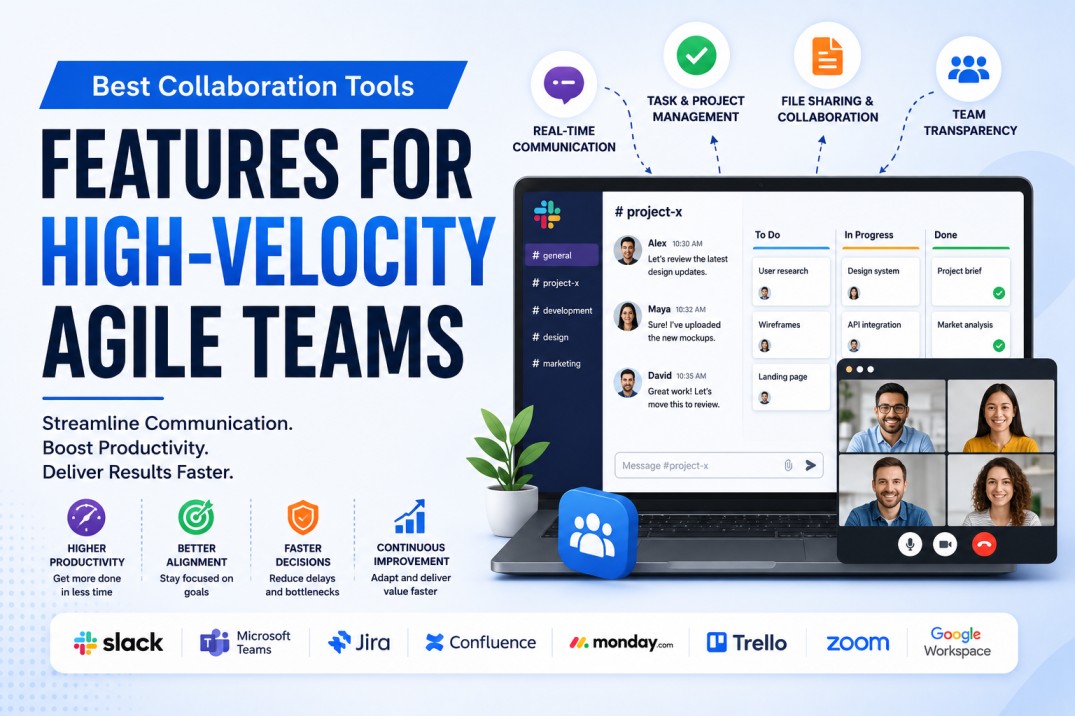
In today's fast-paced digital landscape, agile teams are expected to deliver faster releases, collaborate across distributed environments, and continuously adapt to changing business requirements. While agile methodologies provide the framework for speed and flexibility, the success of high-velocity teams largely depends on the collaboration tools they use. The right collaboration platform helps teams streamline communication, coordinate workflows, track progress, and maintain transparency. However, many organizations discover that traditional collaboration tools introduce complexity, security concerns, performance bottlenecks, and escalating operational costs as teams scale. This article explores the most important collaboration tool features for high-velocity agile teams, their advantages and limitations, and why organizations are increasingly choosing Nevolearn as a more secure, scalable, and efficient alternative. Agile teams thrive on continuous communication, rapid feedback loops, and seamless knowledge sharing. Whether teams are working remotely, in hybrid environments, or across multiple locations, collaboration tools become the central hub for planning, execution, and delivery. Accelerate decision-making Improve transparency Reduce communication silos Streamline sprint planning Enhance stakeholder visibility Support continuous improvement Increase productivity and delivery speed However, not every platform is built to handle the demands of high-velocity agile environments. Real-time communication enables team members to share updates, discuss blockers, and coordinate activities instantly. Faster issue resolution Improved team alignment Reduced email dependency Supports distributed teams Information overload Critical discussions can get buried Context switching reduces productivity Difficult to maintain knowledge history Agile teams need tools that support sprint planning, backlog grooming, story management, and task tracking. Better sprint visibility Improved workload management Clear ownership of tasks Enhanced project tracking Complex configurations Steep learning curves Administrative overhead Can become difficult to scale Documentation platforms help teams maintain requirements, meeting notes, processes, and knowledge repositories. Centralized knowledge management Easier onboarding Improved information sharing Reduced dependency on individual team members Documentation can quickly become outdated Difficult version control management Search inefficiencies Content duplication Automation reduces repetitive manual work and ensures consistency across processes. Saves time Reduces human error Improves operational efficiency Accelerates delivery cycles Initial setup complexity Ongoing maintenance requirements Potential workflow disruptions Increased dependency on tool configurations Modern agile teams use multiple tools for development, testing, deployment, communication, and reporting. Unified workflows Improved data consistency Reduced manual effort Better visibility across systems Integration failures Security vulnerabilities Additional licensing costs Complex troubleshooting Data-driven teams rely on metrics to improve performance and identify bottlenecks. Better decision-making Improved forecasting Enhanced sprint planning Visibility into team performance Data overload Misleading metrics Complex dashboards Additional training requirements Agile teams frequently exchange files, assets, reports, and project documentation. Faster collaboration Centralized content access Improved document visibility Simplified review cycles Storage limitations Version conflicts Permission management challenges Security risks High-velocity teams often need access to information on the go. Increased flexibility Faster response times Better accessibility Improved remote collaboration Reduced functionality on mobile devices Security concerns User experience inconsistencies Device compatibility issues As organizations handle sensitive business information, security becomes a critical requirement. Data protection Regulatory compliance Risk reduction Secure collaboration Complex administration Increased implementation costs User friction Ongoing compliance management Collaboration platforms must maintain performance as teams, projects, and users grow. Supports organizational growth Maintains productivity Handles increasing workloads Ensures business continuity Infrastructure costs Performance degradation at scale Upgrade requirements Resource-intensive management While collaboration tools offer significant advantages, organizations frequently encounter challenges such as: Tool sprawl and fragmented workflows Rising subscription and licensing costs Performance bottlenecks Security vulnerabilities Complex integrations User adoption challenges Administrative overhead Scalability limitations Increased maintenance responsibilities Many companies find themselves investing heavily in multiple platforms while still struggling to achieve seamless collaboration and operational efficiency. Instead of managing multiple disconnected tools and bearing the associated technical burden, organizations are increasingly turning to Nevolearn as a comprehensive collaboration and learning ecosystem designed for modern enterprises. Security remains one of the biggest concerns with traditional collaboration platforms. Robust security architecture Secure user access controls Enterprise-grade data protection Compliance-ready infrastructure Reduced security management complexity This enables teams to collaborate confidently without compromising sensitive business information. High-velocity teams cannot afford delays caused by slow systems. High-performance infrastructure Faster content delivery Reliable platform responsiveness Consistent user experiences Optimized scalability for growing teams Teams remain productive regardless of organizational size or workload volume. Many collaboration platforms require organizations to invest heavily in setup, maintenance, integrations, and support. Handling infrastructure management Managing platform updates Reducing operational complexity Eliminating maintenance overhead Providing ongoing platform support Organizations can focus entirely on business growth rather than technology administration. Modern businesses require platforms that support growth initiatives without creating technical barriers. Launch quickly Scale efficiently Deliver seamless user experiences Support expanding teams and audiences Accelerate business initiatives This flexibility makes it easier to adapt to changing business needs and market demands. One of the most overlooked challenges of traditional collaboration ecosystems is the cumulative cost of multiple subscriptions, integrations, maintenance efforts, and administrative resources. Reduce technology expenses Consolidate operational workflows Minimize maintenance costs Lower administrative burden Maximize return on investment Organizations spend significantly less time and resources managing technology while gaining greater value from a unified platform. Perhaps the biggest advantage of Nevolearn is that it allows organizations to focus on what truly matters. Infrastructure maintenance Security management Performance optimization Platform upgrades Integration complexities Innovation Product development Customer success Business growth Strategic initiatives The best collaboration tools for high-velocity agile teams provide real-time communication, project visibility, workflow automation, integrations, analytics, and strong security controls. These features undoubtedly help teams move faster and collaborate more effectively. However, as organizations grow, the limitations become increasingly apparent. Multiple tools create fragmented workflows, rising subscription costs, integration challenges, security concerns, performance issues, and significant administrative overhead. Teams often spend valuable time managing technology rather than driving innovation and business outcomes. This is where Nevolearn stands apart. Nevolearn delivers a secure, scalable, and performance-optimized platform that removes the complexity associated with traditional collaboration ecosystems. Organizations benefit from enterprise-grade security, streamlined operations, reduced technical burden, improved scalability, and lower overall costs. Instead of managing multiple systems and ongoing maintenance requirements, businesses can leave the technology responsibilities to Nevolearn and focus entirely on growth, productivity, and delivering value. For high-velocity agile teams seeking a future-ready collaboration environment without the operational headaches, Nevolearn offers a smarter, more efficient path forward.Why Collaboration Tools Matter for Agile Teams
Effective collaboration tools help teams:
Essential Collaboration Tool Features for High-Velocity Agile Teams
1. Real-Time Communication and Messaging
Benefits
Limitations
2. Agile Project and Sprint Management
Benefits
Limitations
3. Collaborative Documentation
Benefits
Limitations
4. Workflow Automation
Benefits
Limitations
5. Integration Ecosystem
Benefits
Limitations
6. Advanced Reporting and Analytics
Benefits
Limitations
7. File Sharing and Content Collaboration
Benefits
Limitations
8. Mobile Accessibility
Benefits
Limitations
9. Security and Compliance Controls
Benefits
Limitations
10. Performance and Scalability
Benefits
Limitations
Common Challenges with Traditional Collaboration Tools
Why Nevolearn Is a Better Alternative for High-Velocity Agile Teams
Enterprise-Grade Security
With Nevolearn, organizations benefit from:
Exceptional Performance Optimization
Nevolearn delivers:
Simplified Technology Management
Nevolearn removes these challenges by:
Easy to Market and Scale
Nevolearn enables organizations to:
Cost-Efficient Operations
Nevolearn helps organizations:
Focus on Core Business Objectives
Instead of worrying about:
Teams can dedicate their energy to:
Pros and Cons Summary
Final Verdict
About the Author
Shreya
Digital Marketer and Consultant•35 Articles Published
Shreya is a seasoned Digital Marketer and Consultant with a wealth of experience in the industry. With a passion, Shreya has helped numerous businesses achieve their online marketing goals and drive growth. As a digital marketing expert, Shreya possesses a deep understanding of various digital channels, including search engine optimization (SEO), pay-per-click (PPC) advertising, social media marketing, content marketing, and email marketing. Leveraging this knowledge, Shreya develops effective digital marketing strategies tailored to each client's unique needs and objectives. In addition to hands-on digital marketing execution, Shreya also excels in strategic consulting. Through in-depth market research and analysis, Shreya provides valuable insights and recommendations to optimize marketing campaigns, improve online presence, and maximize return on investment (ROI).